From Turing to agents: a short history of artificial intelligence
Seventy-five years of big promises, two long winters and one very fast decade. What actually changed, and what it means if you are building with AI today.
Alexandru Barbu · · 10 min read
Every few years someone announces that artificial intelligence has finally arrived. They have been saying it since the 1950s. Sometimes they were wrong by decades. Lately, they have mostly been right.
We build AI features for clients every week, and the most useful thing we know about the field is its history. Not for nostalgia: the same patterns keep repeating, and knowing them is the fastest way to tell a real capability from a demo.
Here is the story in seven chapters.
A question, before the machines (1943–1956)
The idea came before the hardware could carry it. In 1943, Warren McCulloch and Walter Pitts described a simplified mathematical model of a neuron: a unit that adds up its inputs and fires if the total crosses a threshold. Almost every neural network since is a descendant of that sketch.
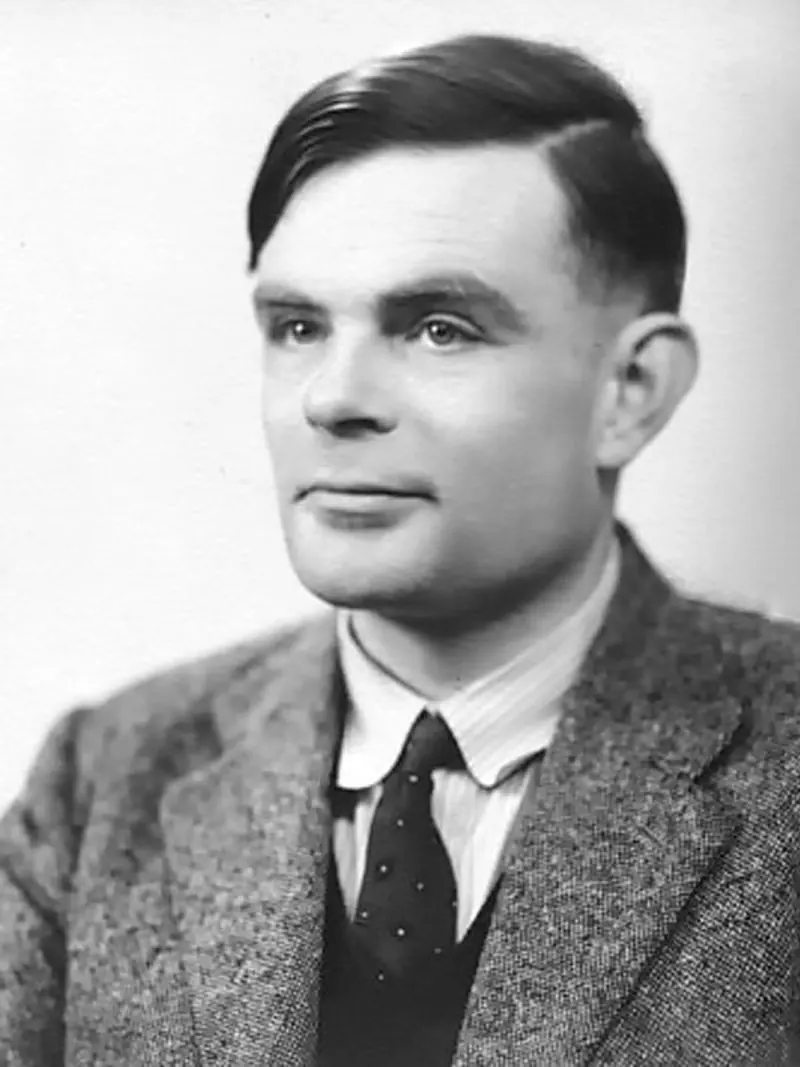
In 1950, Alan Turing published Computing Machinery and Intelligence and sidestepped the question "can machines think?" with a practical test. If a judge chatting in text cannot reliably tell a machine from a person, Turing argued, the distinction stops being useful. He called it the imitation game. Today we call it the Turing test, and for most of the next seventy years no machine came close.

The field got its name in 1955, in a funding proposal by John McCarthy, Marvin Minsky, Nathaniel Rochester and Claude Shannon for a summer workshop at Dartmouth College. They wrote that "every aspect of learning or any other feature of intelligence can in principle be so precisely described that a machine can be made to simulate it", and they expected significant progress in a single summer. The 1956 workshop is usually counted as the birth of artificial intelligence as a discipline. It also set a tradition the field has kept ever since: underestimating how hard the problem is.
The age of optimism (1956–1973)
The early results were genuinely impressive for the computers of the time. Programs proved theorems in logic, played checkers well enough to beat their authors and solved algebra problems from school textbooks.
In 1958, Frank Rosenblatt built the perceptron, a machine that learned to recognise simple shapes by adjusting the weights between its artificial neurons. It was the first neural network that learned from examples instead of following hand-written rules, and the press treated it as the first step toward machines that would walk, talk and be conscious.
In the mid-1960s, Joseph Weizenbaum at MIT wrote ELIZA, a program that imitated a psychotherapist by turning the user’s statements back into questions. It understood nothing. People confided in it anyway, which disturbed Weizenbaum enough that he spent much of his later career warning about it. The lesson still applies: fluent language is very easy to mistake for understanding.
Then the limits showed. In 1969, Minsky and Seymour Papert published Perceptrons, which proved that a single-layer perceptron cannot learn some very simple functions. Multi-layer networks could, in principle, but nobody knew how to train them. Research on neural networks largely stopped for over a decade.
The first winter (1973–1980)
In 1973, the Lighthill report to the British government concluded that AI had failed to deliver on its "grandiose objectives". The problem was what researchers called the combinatorial explosion: methods that worked on toy problems collapsed when the number of possibilities grew to real-world size. Funding was cut in the UK, and American agencies grew similarly sceptical.
This was the first AI winter: a period when money, attention and graduate students left the field because the promises had outrun the results.
Expert systems and the second winter (1980–1993)
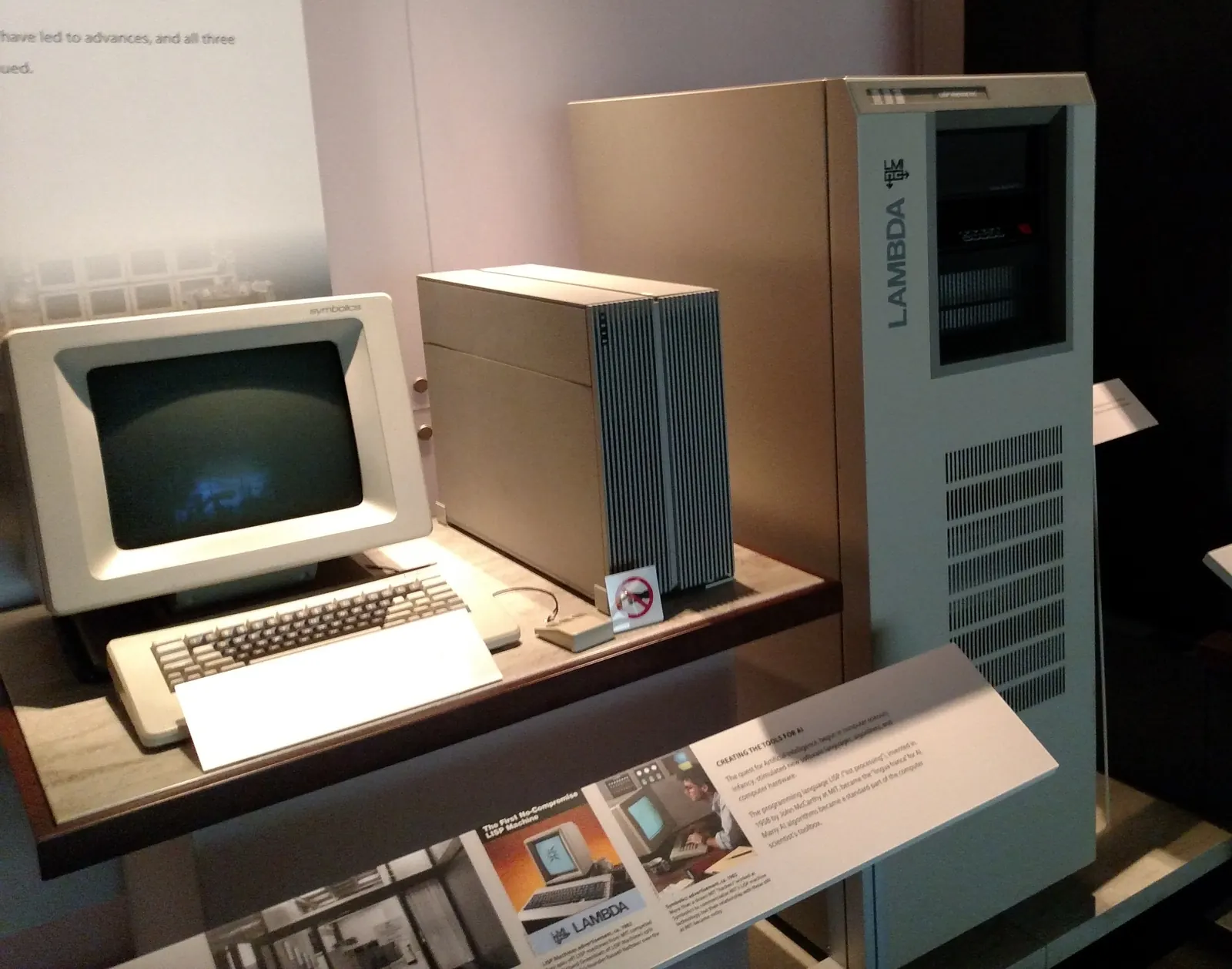
AI came back in the 1980s in a more modest, more commercial form. Instead of general intelligence, expert systems captured the knowledge of human specialists as thousands of if-then rules. XCON, built for Digital Equipment Corporation, configured computer orders and was reported to save the company millions of dollars a year. Japan launched its ambitious Fifth Generation Computer project in 1982, and companies spent heavily on specialised hardware to run AI software.
Expert systems worked, within narrow limits. They were expensive to build, could not learn, broke in strange ways when they met a case nobody had written a rule for, and were painful to maintain as the rules multiplied. When cheaper desktop computers made the specialised AI hardware market collapse in 1987, a second winter followed.

Quietly, during this period, the most important idea of modern AI was published. In 1986, David Rumelhart, Geoffrey Hinton and Ronald Williams showed in Nature how backpropagation could train neural networks with several layers, solving the problem that had stalled the field since 1969. Yann LeCun used it to build convolutional networks that read handwritten digits, and by the late 1990s such systems were reading a share of the cheques processed in the United States. The method worked. The computers and the data to use it at scale did not exist yet.
Statistics wins quietly (1993–2011)
Through the 1990s and 2000s, AI mostly stopped calling itself AI. The successful work was machine learning: statistical methods that learned patterns from data instead of encoding expert rules. It powered spam filters, credit card fraud detection, search ranking and the recommendations that told you which book or film you might like next.
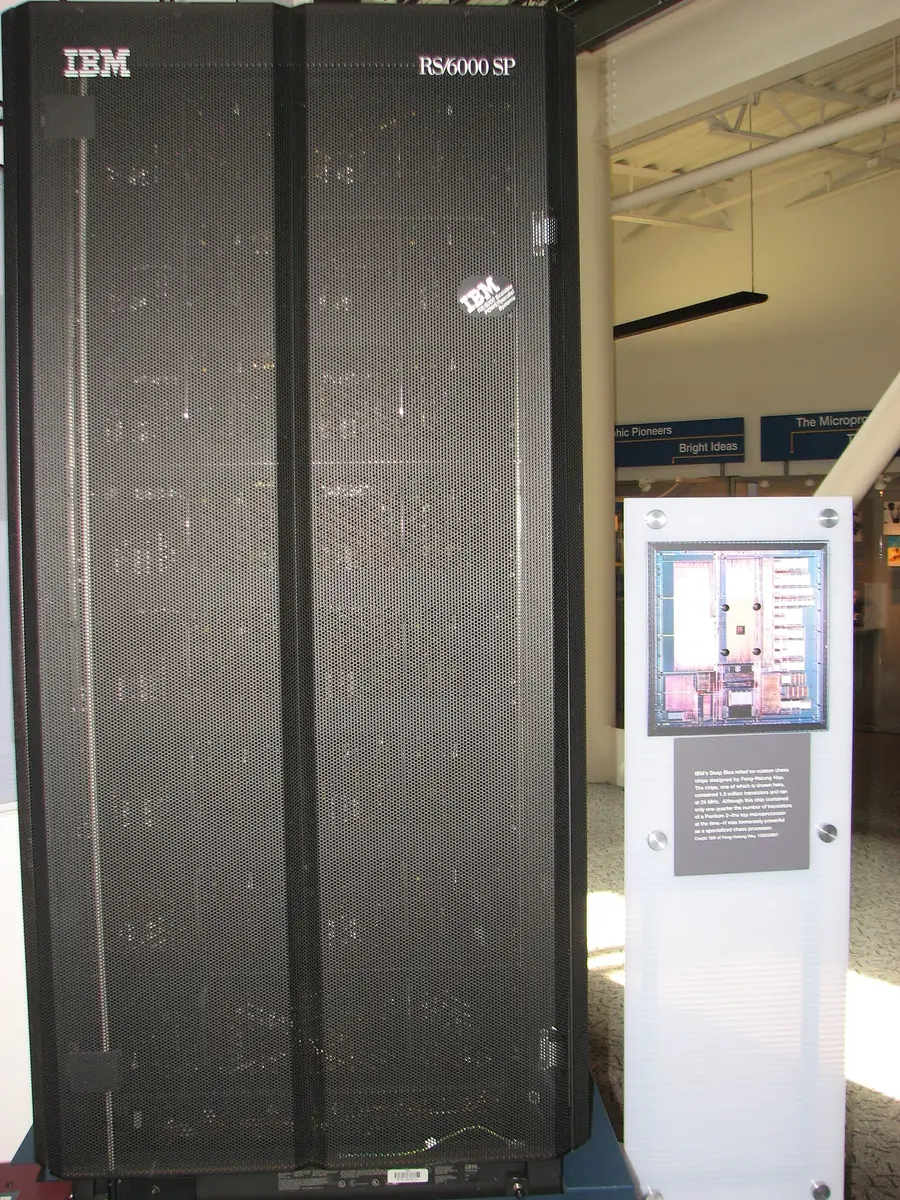
The public milestones were mostly games. In 1997, IBM’s Deep Blue beat world chess champion Garry Kasparov in a six-game match. It was a triumph of engineering and brute-force search rather than learning, but it changed what people believed machines could do.

In 2011, IBM Watson won the quiz show Jeopardy!, and Apple shipped Siri. The same year, Fei-Fei Li’s ImageNet project, a dataset of millions of labelled images released in 2009, was running its second annual competition. That dataset would turn out to be the spark.
Deep learning changes everything (2012–2020)
In 2012, a neural network called AlexNet, built by Alex Krizhevsky, Ilya Sutskever and Geoffrey Hinton, entered the ImageNet competition. It made errors on about 15% of the test images. The best competing entry made errors on about 26%. A gap that size, in a mature competition, was unheard of.
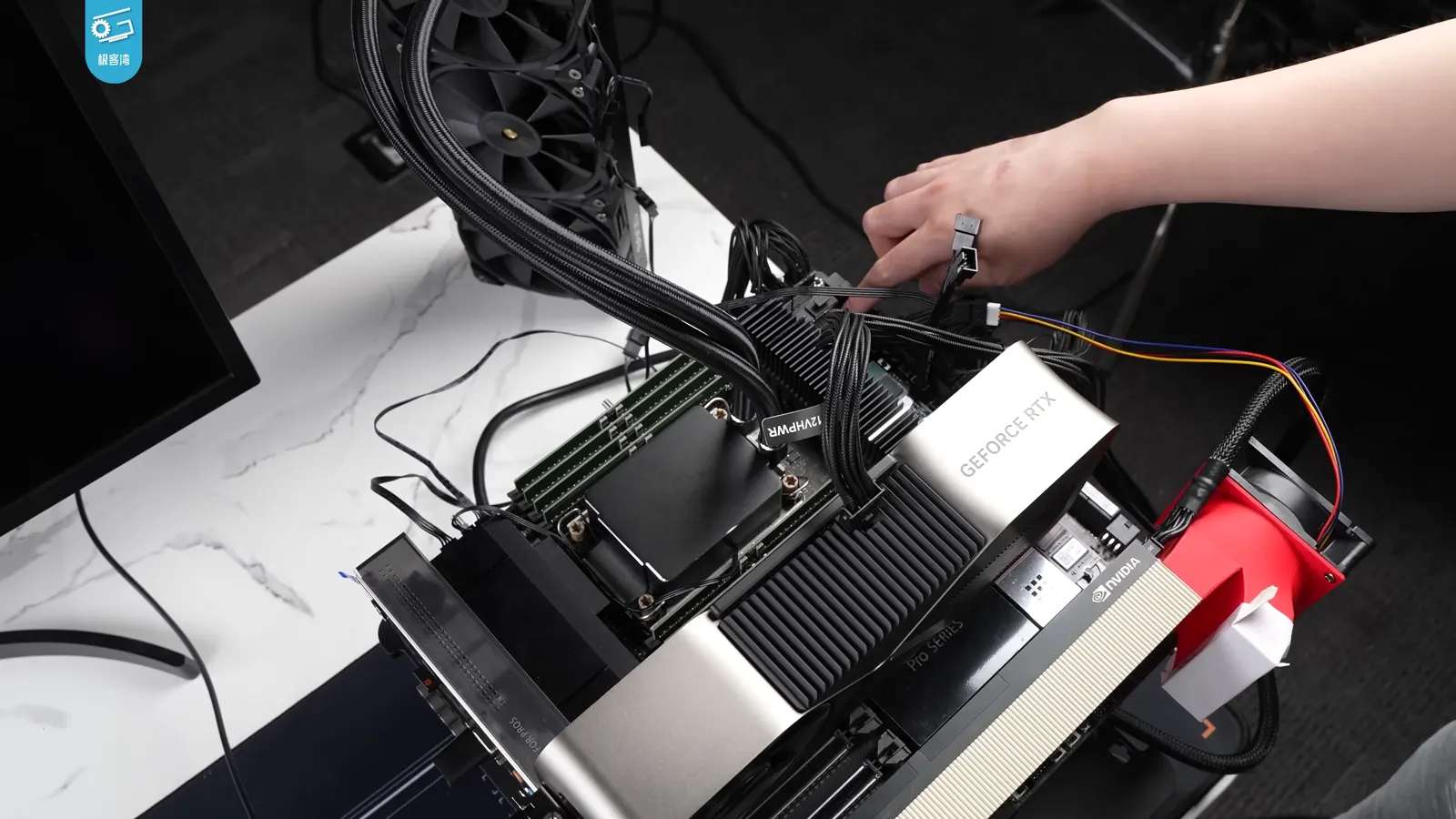
Three things had come together: backpropagation from the 1980s, large datasets like ImageNet, and graphics cards (GPUs), originally built for video games, which turned out to be extremely good at the arithmetic neural networks need. Within a few years, deep learning became the dominant approach in image recognition, speech recognition and translation.

The milestones arrived quickly:
- 2014: generative adversarial networks (GANs) learned to produce realistic images, and sequence-to-sequence models with attention dramatically improved machine translation.
- 2016: DeepMind’s AlphaGo beat Lee Sedol, one of the strongest Go players in the world, four games to one. Go had been considered at least a decade away from machine mastery.
- 2017: researchers at Google published Attention Is All You Need, introducing the transformer architecture. It processes a whole sequence at once rather than word by word, which made it far easier to train on enormous amounts of text. Nearly every major language model since is built on it.
- 2018–2020: OpenAI’s GPT series and Google’s BERT showed that a transformer trained simply to predict the next word in huge amounts of text learns grammar, facts and a surprising amount of reasoning along the way. GPT-3, in 2020, could perform tasks from a few examples written in plain English, without any retraining.
- 2020: DeepMind’s AlphaFold 2 predicted the 3D shapes of proteins with accuracy close to laboratory methods, solving a fifty-year-old problem in biology.
Researchers also found that model quality improved predictably as models, data and computing power grew together. These scaling laws turned AI progress from a matter of clever ideas into, at least partly, a matter of investment. The computer scientist Rich Sutton summed up the uncomfortable conclusion in a 2019 essay called The Bitter Lesson: over seventy years, general methods that make use of more computation have consistently beaten approaches built on human cleverness.
The generative era (2021–today)
For most people, AI history starts on 30 November 2022, when OpenAI released ChatGPT as a free research preview. It reportedly reached 100 million users in about two months, faster than any consumer application before it. The underlying technology was not new. What was new was a chat interface, a model trained to follow instructions and to be helpful, and the decision to let everyone try it.

The year had already brought image generators that could paint from a sentence: DALL·E 2, Midjourney and the openly released Stable Diffusion. What followed was the fastest period of progress in the field’s history:
- 2023: GPT-4 passed professional exams at a level that would have seemed absurd two years earlier. Anthropic released Claude, Google released Gemini, and Meta released Llama, whose openly available weights let anyone run a capable model on their own hardware. Models learned to call external tools, so they could look things up and act instead of only answering from memory.
- 2024: models became multimodal, working with text, images and audio together, and their context windows grew to whole books and codebases. The Nobel Prize in Physics went to John Hopfield and Geoffrey Hinton for foundational work on neural networks; the Chemistry prize went partly to Demis Hassabis and John Jumper for AlphaFold. In the autumn, reasoning models appeared: models trained to work through a problem step by step before answering, which made them markedly better at mathematics, science and code. In Europe, the AI Act entered into force, the first comprehensive law regulating AI.
- 2025: open-weight reasoning models such as DeepSeek-R1 showed that frontier-level results did not require frontier-level budgets, and prices per task kept falling. Shared standards like the Model Context Protocol made it easier to connect models to real data and tools. The year’s theme was agents: systems that plan and carry out multi-step work, from researching a question to writing, testing and fixing software, with a person reviewing the result instead of doing every step.
That is roughly where we are as I write this, in October 2026. The models are not generally intelligent in the sense the Dartmouth proposal imagined. They still make confident mistakes, and they need careful engineering around them to be reliable. But a well-designed AI system can now do real, valuable work that no software could do five years ago.
What the history teaches
Seventy-five years of booms and winters leave a few lessons that we use on every project.
Fluency is not accuracy. ELIZA fooled people in 1966 with a few hundred lines of code. Modern models are vastly more capable, but they still produce wrong answers in perfect sentences. Any system where mistakes matter needs a way to check them: grounding answers in your own data, validating outputs, keeping a person in the loop for decisions that count.
Narrow and measurable beats grand and vague. Expert systems failed when they were sold as artificial experts and succeeded when they configured computer orders. The AI projects that pay off today start the same way: one workflow, one clear measure of success. For Roua Travel, that workflow was preparing travel offers. AI-assisted research and generated PDF offers cut the time needed to prepare one by around 90%, and the people involved spend that time with customers instead.
The cost curve is your friend. Every winter began when ambitions outran what the hardware could afford. The current trend is the opposite: capability per euro keeps rising quickly. A feature that is too expensive to run today may be cheap next year, so it is worth designing systems that can swap one model for a better one without being rebuilt.
Rules are coming, and that is fine. The EU AI Act’s obligations are being phased in, alongside the GDPR rules that already apply to any personal data an AI system touches. Building with documentation, data protection and human oversight from the start costs far less than retrofitting them, and it makes the product easier to trust.
Be wary of anyone who is certain. The Dartmouth researchers expected significant progress in a summer. The critics of the 1970s were sure neural networks were a dead end. Both were wrong. The honest position is to watch what systems can demonstrably do today, test them on your own problems, and build so you can adapt as they improve.
The machines Turing imagined in 1950 still are not quite here. But for the first time in the field’s history, the gap between what AI promises and what it delivers is small enough to build a business on.